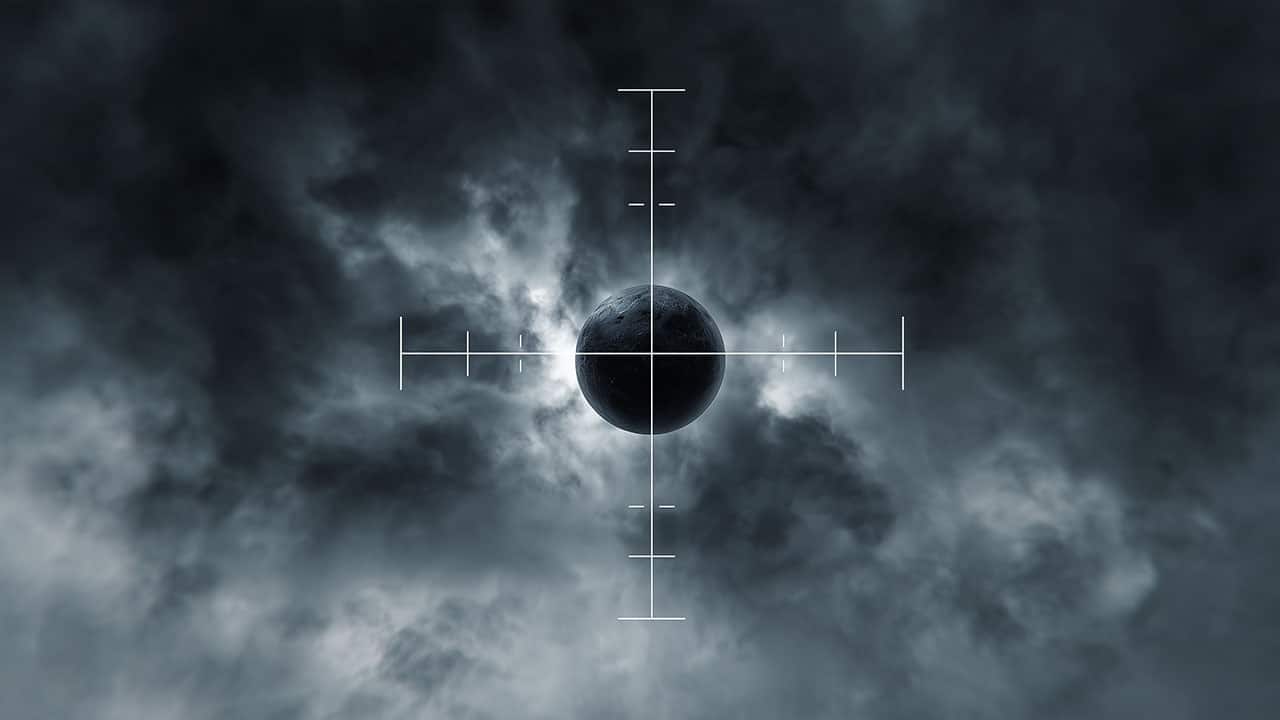
Spherical UAP suggest a minimalist design philosophy for a complex universe: survive everywhere, see everything, point nowhere, move anywhere.
A featureless gray metallic ball doesn’t seem like an especially interesting UFO shape: no wings, no cockpit, no visible engines, no nose, no tail, no cinematic saucer rim. But that simplicity may be exactly what makes it interesting. If even a subset of the objects appearing spherical or ball-like in the PURSUE materials are physical vehicles rather than balloons, sensor artifacts, or misidentified aircraft, then the sphere is not a primitive shape at all. It is a design philosophy: a machine not bound to one direction, one atmosphere, one mode of propulsion, or one way of seeing the world.
New UAP Footage, an Old Shape
The public story begins with a database, but the deeper story begins with geometry. PURSUE, the Presidential Unsealing and Reporting System for UAP Encounters, says its archived materials concern unresolved cases: records for which the government has not made a definitive determination, often because the data are incomplete. The Release 2 page identifies the first tranche as May 8, 2026, the second as May 22, 2026, and lists downloadable Release 2 document and video bundles.
That distinction matters. “Unresolved” does not mean alien, advanced, impossible, or even necessarily unusual. AARO’s historical review of U.S. government UAP investigations found no empirical evidence that any sighting represented extraterrestrial technology, and many unresolved cases might become ordinary cases if better data were available. The engineering question, then, should be framed carefully: not “What alien technology is this?” but “If a sphere were deliberately engineered as a vehicle, what would that design be good for?”
The answer is surprisingly rich. A sphere is not merely a shape; it is a rejection of the directional assumptions built into cars, aircraft, boats, rockets, and missiles. Conventional craft usually have a front, a rear, a preferred attitude, a control surface, and a propulsion axis. A sphere has none of those, unless the designer deliberately adds them.
This is why the ball-shaped UAP is worth treating separately from saucers, triangles, cylinders, and glowing “orbs.” A saucer still suggests a preferred plane. A triangle suggests corners, edges, planform, and orientation. A sphere suggests something stranger: a vehicle whose outer form is indifferent to direction, and whose internal architecture—if engineered—would have to provide steering, sensing, heat rejection, communications, and mission function without relying on wings, rudders, fins, wheels, propellers, or landing gear.
A Hull Designed for Everywhere
The first argument for a spherical vehicle is structural. In pressure-vessel engineering, spheres are special because stress is distributed evenly over the shell. A thin spherical pressure vessel has wall stress proportional to pr/2t, while the hoop stress in a comparable cylinder is pr/t; in simple terms, the sphere handles pressure more efficiently for the same radius, wall thickness, and pressure differential.
That single fact opens a speculative door. A vehicle designed only for Earth’s lower atmosphere does not need to be a pressure vessel in the same sense as a submarine, spacecraft, or high-altitude probe. But a vehicle intended to operate across air, ocean, vacuum, and dense planetary atmospheres would care deeply about pressure loads. It would need to survive not only internal pressure pushing outward, but also external pressure crushing inward, thermal cycling, and abrupt transitions between regimes.
This may be the strongest mundane engineering case for the sphere: it is the “universal hull” shape. A multi-environment mission profile—air, ocean, space, and dense atmospheres such as Venus or the gas giants—would put enormous value on a geometry that remains structurally elegant across pressure extremes. That is speculative, but the underlying design logic is sound: a sphere is one of the few shapes that remains elegant whether the pressure is inside, outside, or changing rapidly.
The tradeoff is that structural elegance is not the same as aerodynamic elegance. A sphere is not a good wing. It does not produce efficient lift. It has blunt-body drag. In ordinary atmosphere, a sphere moving fast must either accept enormous drag and heating, move slowly, hide inside a flow-control envelope, or use a propulsion method that makes aerodynamic shape less important. That is the first clue that, if a ball UAP is truly high-performance, its shape probably tells us less about conventional aerodynamics than about the designer’s willingness to bypass conventional aerodynamics.
Human Analogues: From Bathyspheres to Sensor Balls
Human engineering already turns to spheres when the problem is not graceful flight, but survival, enclosure, and even exposure to forces from every direction. Bathyspheres and deep-ocean pressure housings use spherical or near-spherical geometries because the ocean does not care which way a craft is facing; it presses from everywhere at once. Spherical storage tanks appear for similar reasons: pressure, containment, and stress distribution matter more than streamlining.
Spaceflight offers another partial analogy. Reentry capsules are not usually perfect spheres, but they often embrace blunt, compact forms because the goal is not to slice through the atmosphere like a plane. It is to manage heat, shock, stability, and survival during a violent transition from vacuum into air. The lesson is not that spherical UAP are reentry capsules, but that bluntness can be rational when the environment itself is extreme.
Modern robotics provides a smaller-scale analogy. Ball-shaped drones, throwable sensor packages, rolling robots, and protected camera systems all exploit the sphere’s tolerance for impact, symmetry, and unpredictable orientation. A device that may be dropped, rolled, thrown, submerged, or surrounded by hazards benefits from a shape that has no fragile nose or exposed tail.
The most relevant analogy may be the panoramic sensor. Consumer 360-degree cameras use multiple lenses and software stitching to record a scene without choosing a single direction in advance. A speculative spherical UAP would be a far more advanced expression of that same principle: not a camera mounted on a vehicle, but a vehicle whose entire exterior is potentially part of the camera, antenna, shield, thermal surface, and flight-control interface.
The Frontless Vehicle Hypothesis
Most human vehicles are arrows. A car has a front. A boat has a bow. A jet has a nose and a tail. A rocket is a tube with payload on one end and exhaust on the other. These forms are not arbitrary; they are consequences of moving through a medium while pushing against air, water, ground, or expelled propellant.
The sphere breaks that grammar. It has no built-in front, no privileged direction of travel, and no need to rotate its body before changing heading. If propulsion and control are distributed across the shell, embedded internally, or generated by a surrounding field, the object can accelerate “sideways” without the maneuver looking sideways at all. To an observer, it may appear to dart, stop, reverse, or turn without banking because, geometrically speaking, it never had to bank in the first place.
This is where the ball shape begins to imply a design philosophy. Conventional aircraft are designed around flow: air over wings, exhaust through turbines, control surfaces deflecting pressure fields. A spherical vehicle designed for high agility would instead be designed around vectors: generate force in any direction, sense in every direction, and treat orientation as a software problem rather than an airframe problem. In speculative field-effect or gravitational propulsion concepts, that geometry becomes especially suggestive. The shape fits the idea of a craft whose “engine” is not a nozzle.
The drawback is just as important. A frontless vehicle is elegant only if the propulsion system is also frontless. Without distributed thrust or field control, a sphere becomes an awkward drone body: stable in some ways, inefficient in others, and hard to control precisely at speed. A spherical balloon, sensor pod, or passive object can look mysterious for the same reason—its shape gives few orientation clues. That ambiguity is both an engineering possibility and an analytic hazard.
When the Skin Becomes the Sensor
The second radical possibility is that the sphere is not merely a hull but an instrument. Traditional cameras are descendants of eyes: they point, focus, collect light from one direction, and miss whatever happens outside the field of view. Military targeting systems are far better than human eyes, but they still often depend on pointing, tracking, zooming, and maintaining lock on a moving object.
A spherical vehicle invites a different architecture: the shell as sensor. Imagine a skin tiled with optical, infrared, radio-frequency, magnetic, acoustic, or particle-detection elements. Such a craft would not “look forward.” It would see the whole environment at once, building a fused model of the world from every direction. The vehicle’s software, not its pilot or camera gimbal, would decide what counts as forward.
A useful analogy is the 360-degree camera, which records in all directions and allows a viewer to choose the viewing angle afterward. A truly advanced version would not merely record panoramic video; it would maintain total situational awareness, watching threats, terrain, weather, emissions, and observers simultaneously. The key shift is from directed perception to environmental awareness.
This sensor-skin hypothesis also helps explain why a spherical reconnaissance platform might not need windows, fins, landing gear, or visible apertures. Every protrusion is a structural weakness, a drag penalty, a thermal-management problem, and a potential signature. A smooth sphere is a way to hide complexity behind a continuous surface. But it creates a major engineering burden: power distribution, heat rejection, sensor calibration, shielding, and damage tolerance all have to be solved inside a compact curved shell.
A Machine Built Around the Shell
Most vehicles are built around something internal: a cockpit, engine, payload bay, fuel tank, weapons bay, passenger cabin, or cargo hold. The exterior is then shaped around that priority. A spherical UAP suggests the opposite possibility: an object whose most important system is the shell itself.
In that architecture, the surface is not just a protective covering. It is the sensor array, antenna field, thermal boundary, structural member, and possibly part of the propulsion system. The inside of the sphere becomes less like the cabin of an aircraft and more like the core of a highly integrated instrument, with power, computation, field generation, and control systems arranged radially around a center.
That would be a profound departure from ordinary vehicle design. A fighter jet is built around airflow and thrust. A submarine is built around buoyancy, pressure, and crew survival. A satellite is built around payload, power, and orbital mechanics. A spherical probe would be built around environmental interface: how the craft touches the universe, measures it, moves through it, and survives it.
This also explains why a sphere might appear externally minimalist despite being internally complex. A machine built around the shell has no reason to advertise its subsystems as visible parts. The absence of obvious engines, windows, antennas, and control surfaces would not mean those systems are absent. It would mean they have been absorbed into a continuous skin.
The Propulsion Shape of a Non-Propulsive Machine
If a sphere is moving conventionally, it is usually a poor high-speed aircraft. If it is moving unconventionally, its poor aircraft shape may be the point. A ball-shaped UAP, interpreted as an engineered machine, looks like something designed after the designer stopped caring about wings.
That does not require magic; it requires a propulsion model unlike ordinary flight. A quadcopter can put a camera in a ball-like cage, but the rotors still define up, down, airflow, and control axes. A rocket can be spherical in payload form, but the exhaust still defines a rear. A true high-performance sphere would need either distributed microthrusters, plasma or boundary-layer control, electromagnetic interaction with the environment, inertial manipulation, or some other field-like system that makes the outer surface less about lift and more about containment.
This is why the ball shape keeps pulling the conversation toward field propulsion. Not because field propulsion is proven, but because the geometry is consistent with a craft that pushes or pulls against something other than expelled mass. If force can be generated anywhere around the vehicle, a sphere becomes almost natural: the hull is the frame of reference, and the drive field is the flight surface.
The engineering risk is that such a vehicle would have nowhere to hide inefficiency. A sphere has no long fuselage for fuel tanks, no wings for lift, no tail for stability, no nacelles for engines, and limited volume compared with elongated craft of similar frontal area. Unless the propulsion system is extraordinarily compact and powerful, the sphere’s simplicity becomes a cage. It is a brilliant shape only for a civilization—or a human program—that has already solved the hardest parts.
Heat, Signature, and the Problem of Being Smooth
The smoothness of a sphere is seductive, but heat is where smooth designs often become complicated. Every vehicle must reject waste heat. Aircraft dump it into airflow, spacecraft radiate it away, submarines exchange it with water, and rockets carry hot exhaust away from the vehicle. A sealed sphere with no obvious radiator, plume, intake, or exhaust has to solve thermal management quietly.
That is not impossible. A sphere has low surface area for a given volume, which helps reduce heat transfer in some pressure-vessel contexts; industrial spherical tanks are associated with minimizing mechanical stress and heat transfer through the walls. But low surface area can be a disadvantage when the vehicle needs to shed heat rapidly. For a high-power craft, the same geometry that protects the interior can trap thermal problems inside.
This creates a useful diagnostic question for ball UAP footage: where is the heat? A conventional object moving fast should show aerodynamic heating, engine heat, exhaust, or some other thermal signature depending on sensor band and conditions. If a sphere appears cold, featureless, or thermally odd, that may indicate unusual materials, low-power drift, sensor limitations, compression artifacts, poor range data, or a genuinely unfamiliar heat-management strategy.
A sphere may also have interesting signature behavior. To radar, optics, and infrared systems, a smooth ball can be both simple and deceptive: aspect-independent in silhouette, ambiguous in orientation, and difficult to interpret without range, scale, and motion context. That means a spherical object can look “designed” even when it is mundane, and it can look mundane even when it is designed. The same symmetry that might make it a good vehicle also makes it a bad witness.
What the Sphere Gives Up
The ball’s greatest strength—symmetry—is also its greatest weakness. It does not naturally land. It does not naturally dock. It does not naturally carry passengers in a comfortable orientation. It gives no easy place for landing gear, ramps, wings, rotors, weapons, manipulators, radiators, antennas, or optical windows. Every practical subsystem fights the purity of the shape.
That suggests a mission distinction. If saucers are imagined as crewed vehicles, platforms, or landers, spheres make more sense as probes. A small ball does not need a cockpit. It does not need a deck. It does not need a pilot facing forward. It can be a reconnaissance node, a disposable scout, a relay, a sampler, a decoy, or a sensor package.
The sphere also gives up internal packing efficiency. Human engineering loves cylinders and boxes because electronics, tanks, batteries, seats, actuators, and structural frames often pack better along axes. A sphere is efficient at enclosing volume, but not necessarily at organizing machinery. It demands radial thinking: systems arranged around a core, shell, or field generator rather than along a fuselage.
Finally, a sphere gives up narrative legibility. A triangular craft looks military. A saucer looks like science fiction. A cigar-shaped object looks like a vehicle. A sphere looks like an object. That may be a feature for a probe that wants to be overlooked, but it is a problem for investigators. Without wings, lights, exhaust, control surfaces, or attitude cues, analysts lose many of the clues normally used to classify aircraft.
The Launch-and-Recovery Problem
A sphere that does not naturally land creates an immediate operational question: how does its mission begin and end? Conventional vehicles reveal their operating assumptions through their recovery systems. Airplanes need runways or carriers. Helicopters need pads. Boats need docks. Spacecraft need capsules, landing legs, parachutes, or ocean recovery. A smooth sphere suggests none of these.
That does not make the design impossible. It may imply that the sphere is not meant to land in the ordinary sense. It could be released from a larger platform, dropped from altitude, deployed from orbit, launched from underwater, or ejected from a carrier craft. Recovery might involve docking inside a bay, magnetic capture, field-assisted retrieval, autonomous return to a mothership, or no recovery at all.
This possibility fits the probe interpretation. A small spherical platform may be more like a sonobuoy, weather balloon, missile seeker, planetary probe, or reconnaissance drone than a complete vehicle in its own right. It could be one component in a larger system, optimized for observation and maneuver rather than basing, servicing, or human access.
The absence of landing features therefore becomes meaningful. It may be a drawback for a crewed craft, but it is not necessarily a drawback for a deployed sensor node. A sphere that never touches a runway, never opens a hatch, and never presents a flat underside may not be incomplete. It may be specialized.
Mission Roles for a Ball-Shaped UAP
The most plausible mission role for an engineered sphere is reconnaissance. A small, omnidirectional sensor platform would benefit from total awareness, high maneuverability, minimal protrusions, and a hull that can survive changing pressure regimes. Such a vehicle could inspect aircraft, ships, bases, weather systems, electromagnetic emissions, or terrain without needing to align itself like a conventional drone.
A second role is environmental sampling. A spherical probe could pass through atmosphere, water, volcanic plumes, radiation belts, or dense planetary environments with fewer orientation constraints than a winged craft. The same pressure-vessel logic that makes spheres useful industrially would be valuable for a probe moving between pressure extremes. In that role, the ball is less like an aircraft and more like an instrument capsule that happens to move.
A third role is relay or beacon. A distributed fleet of spherical nodes could map, communicate, triangulate, or monitor. Smooth shells could host antennas, optical receivers, or broadband sensor arrays. If the craft are autonomous, small, and numerous, the absence of cockpits and landing systems is no longer a drawback. It becomes evidence of design discipline.
A fourth role is decoy or ambiguity generator. This is less exotic but strategically important. A spherical object with few identifying features is hard to classify, hard to orient, and hard to estimate for size or range. Whether human, foreign, natural, or unknown, a ball in the sky can create sensor confusion disproportionate to its size. In modern airspace, ambiguity itself can be a mission.
The Fleet Ecology Hypothesis
One way to think about UFO shapes is not as competing descriptions of the same thing, but as a possible ecology of roles. In human systems, not every vehicle is a fighter, a tanker, a drone, a submarine, or a satellite. Different missions create different shapes. A fleet is not one design repeated; it is a family of compromises.
In that speculative taxonomy, spheres are natural scouts. They are compact, directionless, difficult to orient, and well suited to sensing, sampling, and operating across environmental boundaries. Saucers, by contrast, have often been described as larger, flatter, and more vehicle-like, with a geometry that suggests landing, internal decks, and possibly crewed operation. Triangles suggest still another logic: large planforms, atmospheric loitering, stealth, lift, or platform-scale capability.
This does not require every reported shape to be real, related, or intelligently designed. It simply reframes the question. Instead of asking which shape is the “true” UFO, the better engineering question may be why different missions would lead to different forms. A sphere is not a worse saucer. A saucer is not a worse triangle. Each shape may imply a different balance among pressure, propulsion, sensing, crew, endurance, and environment.
The fleet ecology hypothesis also explains why the sphere feels so stripped down. If saucers are primary vehicles and triangles are heavy platforms, spheres may be the small autonomous organs of the system: eyes, scouts, relays, samplers, decoys, or probes. Their minimalism would not be a sign of simplicity. It would be specialization.
The Orb Question
The language around balls, spheres, and orbs is messy. Daylight “metallic sphere” cases suggest physical objects with reflective surfaces and definite silhouettes. Nighttime “orbs” often suggest light sources, glowing plasma-like phenomena, distant aircraft lights, drones, atmospheric effects, or witness experiences that are less obviously mechanical. Lumping them together may hide important distinctions.
From an engineering standpoint, the difference matters. A metallic sphere asks questions about hulls, sensors, propulsion, and mission roles. A glowing orb asks questions about plasma, illumination, atmospheric interaction, optical artifacts, power leakage, or deliberate signaling. One may be a vehicle. The other may be a phenomenon. Or both may be observational categories imposed on incomplete data.
The categories may also overlap. Different lighting and sensor conditions can make the same object appear solid by day and luminous by night. A reflective sphere catching sunlight, an object surrounded by ionized air, or a sensor struggling with bloom and contrast could all move an observation from “metallic ball” to “glowing orb” without requiring a different underlying object.
This is why the design discussion should not outrun the evidence. NASA’s UAP study emphasized better data, calibration, and rigorous analysis rather than sensational conclusions; the recurring problem is not merely that UAP are strange, but that the records often lack the measurements needed to determine range, size, speed, and identity. The sphere may be an engineering clue, but only if the object is truly spherical, truly physical, and truly moving as it appears to move.
The Design Philosophy Hidden in a Ball
If the spherical UAP is a machine, it is a machine designed from first principles. It says: do not optimize for one atmosphere if the mission crosses many. Do not build a front if direction can change instantly. Do not bolt sensors onto a vehicle if the vehicle can become the sensor. Do not treat landing as essential if the mission is observation, sampling, or transit.
This is the philosophical heart of the ball shape. Human vehicles are compromises with local environments. Aircraft obey air. Ships obey water. Cars obey roads. Rockets obey mass fraction. A sphere, in the speculative advanced-vehicle sense, is a refusal to belong to any one environment. It is a shape for a craft whose true medium is not air or water but information, pressure, and force.
That does not make the sphere automatically superior. For human engineering, it is often worse: draggy, awkward, hard to package, hard to land, hard to cool, and hard to adapt to conventional propulsion. The sphere becomes compelling only under a narrow but fascinating set of assumptions: advanced propulsion, compact power, omnidirectional sensing, autonomous operation, and mission requirements that span multiple environments.
Seen that way, the ball-shaped UFO is not the simplest possible craft. It is the simplest possible outer expression of a very complicated inner technology. The shape says almost nothing if the object is a balloon. It says a great deal if the object is an engineered probe. In that second case, the sphere is not a lack of design. It is design stripped to a theorem: survive everywhere, see everything, point nowhere, move in any direction.